
Leading Sessions: Guidelines and Strategies
This approach requires that leaders effectively facilitate the sessions to encourage broad participation and learning. That can be more challenging than presenting content through lectures, yet it creates a powerful learning environment and deep learning that continues beyond the sessions.
Facilitation Requirements and Structure
- Three different groups. Keep Connected requires facilitators who are adept at working with three different groups: Youth, parenting adults, and youth and parents together. Typically, organizations have one facilitator lead the parent sessions and, depending on number of youth, one or two who lead the youth sessions.
- Continuity in facilitation. The most successful facilitators work to build a strong relationship with workshop participants, building a rapport and trust over time. Therefore, it’s important to maintain consistency in facilitators through the Keep Connected workshop series.
- Joint facilitation of family portions. Facilitators from both the parenting adult groups and the youth groups should co-lead family sessions. Co-facilitation makes the family time more comfortable for everyone (both youth and parenting adults), since they’re already building a strong relationship with at least one of the facilitators. In addition, the facilitator who works with youth will likely have additional ideas for how to draw young people more fully into the conversation.
- Flexibility and structure. The facilitation guides for each session support an interactive experience that is responsive to the experiences, interests, and needs of participants while also facilitating structured learning to achieve the session objectives.
Balancing the flexibility and structure can be challenging for some facilitators and some groups. Some groups may not have experience with this style of interactive learning and may be reluctant to participate, while others may dominate the discussion. They can pull the session off onto topics that may be of little or no interest to other participants, or they can interact in ways that are disrespectful or awkward. If left unchecked, these individuals can make others less interested in participating.
Preparing to Lead Keep Connected Sessions
- Know the families you serve. Adjust the material to fit with their needs, priorities, culture, current challenges, and expertise. As you prepare, think about how specific parenting adults and youth might respond to the materials, the questions, and the interactions with others. For example, a parent in the cohort may have older children and can speak to the issues that arise as kids grow up, and they could be a resource for the sessions.
- Take time to learn and understand the material in advance of the sessions. One facilitator in the pilot project said: “[Get] the feel for it—you have to read through it quite a few times.” Another emphasized being prepared for the sessions—you can’t “wing it.”
- Anticipate language needs. Keep Connected facilitator materials are written in English. Family handouts are available in English and Spanish. Sessions may be led in English or Spanish, or they can be translated (which extends the session length considerably). If you need to have family handouts in other languages, you may translate them for your own use. Contact Search Institute about potential collaboration so we can make them available to others as well.
- Don’t try to be the expert. You won’t always have all of the answers, and that’s okay. (You may be able to help find the answers, though.) In fact, participants often said that a strength of Keep Connected was when facilitators shared their own experiences, challenges, and vulnerabilities. This mutual sharing helps deepen trust in the group.
- Identify other resources for families. Some sessions may bring up issues that require deeper conversation or work with particular families. (That kind of counseling or social work support is not the purpose of these sessions.) Group settings are often not the right place to work through certain issues.
- Give it time. In pilot testing Keep Connected, facilitators gained confidence in using the materials as they practiced it, and the sessions continued to improve as facilitators led them several times with different cohorts of families.
What’s in the Facilitator’s Guide
Here’s what you’ll find in the facilitator’s guide:
- Overview: A brief summary of the session to orient facilitators and other program leaders to what happens in the session. It can be adapted to describe the workshop to families.
- Learning objectives: The learning focus to keep in mind while planning and leading sessions, as well as when checking to see whether participants are internalizing the key themes.
- Activities at a glance: A one-page summary of the session, including estimated times. This section also highlights key activities to include in the sessions in order to engage participants in the most important themes.
- Facilitator Planning Worksheets: Tools to help facilitators prepare for and organize each session. A well-prepared facilitator will be able to use these sheets as their primary guide when leading sessions. They identify each activity’s purpose, facilitation method, supplies, and estimated time, based on the facilitator’s knowledge about what works in their own context.
- Preparation, materials, and supplies: A nuts-and-bolts checklist of all the supplies and materials needed in each session.
- Detailed facilitator guides: Step-by-step guides for each session, including the curriculum for parenting adults, youth, families together, and the extended parent session (if youth are not participating). They provide detailed process steps, sample language for mini-presentations, discussion questions, and other suggestions.
Effective facilitation requires internalizing the process and content outlined in these guides, not using them as scripts to read through while facilitating sessions. Learn more about preparing to lead Keep Connected sessions.
- Worksheets and handouts: Ready-to-reproduce handouts and worksheets are provided, including the at-home activities for each session. These may be reproduced in color or black and white.
NOTE: Use the electronic version of handouts (available here) in order to print higher-quality copies (in color or black and white). Spanish versions of family handouts are available. (Other languages may be added based on needs expressed by users.)
Preparing for Each Session—Step by Step
Internalize the session content, themes
- Download the facilitator’s guide and handouts for the session. (The latest version will always be available online.)
- Read the facilitator’s guide (several times) for the session.
- Review the background information on developmental relationships related to the session.
- Reflect on your own experiences related to the topic. How are these experiences a resource for facilitation? How might they get in the way?
- Internalize the session objectives, content, flow, and activities.
- Imagine a family you know participating. What would they experience?
- Identify any necessary adaptations to fit your group’s size, culture, or other unique qualities. (See guidelines.)
- Take notes of questions and ideas.
- Consider holding a team meeting to talk about the session and ideas to make it work well.
Complete the Facilitator Planning Worksheet (in the facilitator’s guide)
- Write down notes that will help you facilitate the session.
- Work through it until you can mentally deliver the session without additional notes.
- Coordinate with other facilitators, as needed.
- Review: Does the session as you plan to deliver it meet the objectives?
Gather supplies and finish other preparation
- See preparation and supplies checklist.
- Remember posters or artifacts from previous sessions.
- Coordinate with other facilitators to be sure the pieces fit together.
Leading the Sessions with Parents, Youth, and Families
- Welcome: Whenever possible, have all the logistics ready when families start arriving so you can focus on welcoming them, catching up on their week, and helping them connect with each other.
- Facilities: Be sure family members know where they can find restrooms and any other needed facilities. If childcare is provided, be sure they know about it and where it is.
- Session structure: Remind families that youth and parents meet separately for about half of the session. Then, they come together for the second half. (If you’re not including youth, the extended parent session continues without interruption, though you may choose to take a break.)
- Schedule: Reinforce the schedule for the sessions each time you meet, particularly highlighting the next scheduled session. In addition, be clear about the plan for the graduation celebration.
- Key messages: Early in each session is an opportunity to introduce the key messages. This is an important chance to reinforce the core ideas in ways that help the families focus on the purpose of the session.
- At-home activities: Each session includes several options for at-home activities that extend the learning to the family. More importantly, these activities encourage families to establish new positive habits and routines that, we hope, continue beyond the workshop series. Therefore, these experiences are not “add-ons” but are integral to the Keep Connected design. Be sure to give families time to pick the one thing they’ll do that really fits them and their interests.
NOTE: We strongly encourage you to avoid describing at-home activities as “homework.” Homework has negative implications for many families. The at-home activities are designed to enrich family life and to establish positive habits at home.
Adapting Sessions to Work for You
Facilitators often wonder how important it is to follow the activities in the sessions vs. adapting them to fit the facilitator’s own style, the way their organization typically works, and the families that participate. Here are some guidelines:
- Assume that the sessions work. The facilitator’s guide offers a diverse set of learning and sharing experiences designed to engage families for about 90 minutes. Even if they may be outside your most comfortable style of leading groups, try them and see how they go. Then, consider how you might improve them the next time. (This could include just improving your own facilitation as you experience the activities. Or you may find that you need to adapt them, based on the families you engage.)
- Respond to cultural or other group dynamics. You may find activities you know are problematic for use with particular groups of parents or particular cultural groups. These would be appropriate to adapt. Please give this feedback to Search Institute so we can ensure that future materials address the concern.
- Don’t adjust just because it will be easier. Sometimes it’s more work to break into small groups rather than having a large-group discussion. Or it’s easier to stay sitting down rather than getting up and moving around. However, the methods selected are designed to offer variety for participants and to work with different learning styles and personality types. Push yourself to maintain a variety of activities and discussion formats designed to enhance growth and learning.
- A better idea (not just an easier one). You may think of an alternative way to facilitate a portion of a session that will be more powerful than what’s written while also meeting the goals of the session and the purpose of the written activity. These may tap specific resources in your community. Or it may simply be a creative idea that goes beyond what we imagined as we were creating these sessions. (Search Institute would love to hear what you did.)
Focus on key activities. If cuts in activities are needed due to unforeseen circumstances, focus time on the key activities in each session. These are highlighted in the “at a glance” chart for each session.
Basic Facilitation Tips
Set the stage for participation
- Set shared ground rules or expectations about how group members interact with each other. (Session 1 includes youth proposing and parenting adults adopting ground rules for discussions.) During the pilot project, one facilitator said about ground rules:
“We set goals the first meeting, saying that what we hear here stays here. We don’t share the information we hear, you know, be respectful. If you don’t agree with what the parent is saying, we just respect that idea and no confrontation. We’re not trying to change someone’s mind. It’s just everyone sharing their experiences.”
- Be welcoming, warm, and nonjudgmental. Parenting adults may have a history of difficult relationships with schools and other organizations. They may be reluctant and mistrustful to open up because of these experiences. In addition, kids and parents may be tired, having spent a whole day in school or at work.
Keep sessions on track with time management strategies
- Plan ahead with materials and have all handouts and activities set up before the start of each session.
- Use a clock or designate a timekeeper to signal when it’s time to transition.
- Consider doing highs/lows or introductions during the shared family meal to save some time at the beginning of the youth and parenting adult sessions.
Anticipate language needs
- If a participant’s first language is not English (or the language being used during the sessions), seat this person closer to a translator or next to someone who is bilingual.
- Let participants know that use of their primary language will be honored during Keep Connected.
- Provide a translator with all session materials ahead of time.
- Remember that participants may understand what’s happening, but not all may be comfortable speaking in front of others.
Encourage full participation
- Check understanding of all participants using nonverbals, such as thumbs-up/thumbs-down.
- Provide positive reinforcement to parents and youth who may be reluctant or nervous to participate.
- Use a talking piece (such as a talking stick or a koosh ball) to designate a speaker and discourage interruption when someone is talking.
- Use wait time to allow participants to think through their answers and absorb what is being said.
- Address participants privately if they are talking over others.
Build trust by sharing your own experiences or struggles
- Parents and youth enjoy learning from a facilitator who understands what they’re going through and is willing to share stories from their middle school years.
- Stories from personal experience may provide connections. It also reminds them that you, too, face challenges in family life and parenting.
- If you aren’t a parent, you can still lead parenting sessions. Be open about your own life experience, and ask questions. (Let the parents teach you.) You can also highlight examples you’ve seen from other parents or from your own family growing up.
- Make sure your personal stories don’t overpower the session or imply that your parenting style is the “correct” way.
Be confident in your abilities as a facilitator
- Become familiar ahead of time with your section of Keep Connected, anticipating parts that may need more of your attention.
- Imagine that your sessions will be a success. Participants will not worry about what will go wrong and will typically not notice mistakes.
- Create your own summary of the session beforehand.
After each session, reflect on how it went and what might be improved for next time.
Tips for Facilitating Youth Sessions (Videos)
Effective Youth-Led Discussions
- Establish the learning goal of the day.
- Provide expectations for speaking and listening.
- Ask youth to reflect before they discuss.
- Facilitate discussion so it flows naturally back and forth between students, not just between facilitator and youth.
- Encourage youth to respond directly to each other instead of to the facilitator only.
- Teach youth to acknowledge each other’s thoughts, such as by saying, “I agree with,” “I respectfully disagree with,” or “I would like to add.”
Creating a Comfortable Learning Environment
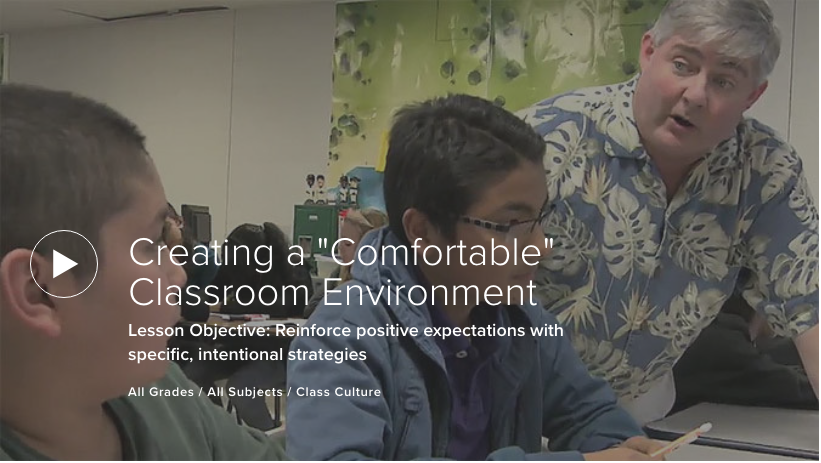
- Middle school youth are sensitive to an argumentative tone, so consider lowering your voice or changing the tone of your voice when speaking.
- Proximity goes a long way—to redirect behavior, stand close to youth and give encouragement when they’re doing something right.
- Youth should not fear judgment or the need to protect what they say in front of the facilitator; they can be themselves.
- Encourage open conversation among peers.
Reducing Disruptions
- Establish routines when youth meet for Keep Connected so they know what to expect and what’s expected of them.
- Use physical proximity to prevent potential disruptions or to discourage youth from being off-task.
- If youth need redirection, try talking to them privately instead of in front of the whole group.
- Use nonverbal cues, such as hand signals or wait time, to prompt youth to focus.
- Plan ahead for each session so activities flow without interruption.
- Use positive narration to point out youth that are on-task and following directions.
Tips for Facilitating Parenting Adult Sessions (Videos)
Facilitating Parent Groups: Overview
- Be available and be a good listener, even when parents’ concerns aren’t part of the workshop.
- Sit with members, not apart from them.
- Know content; keep the session on track.
- Speak clearly and plainly, not using “teacher talk.”
- Encourage all members to participate. Show appreciation for all responses.
- Take notes throughout the session to help highlight important points in the wrap-up.
Working with Groups
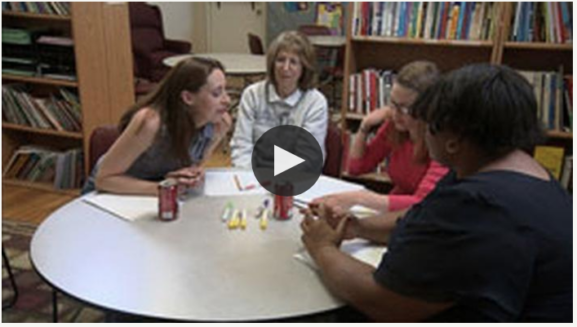
- Use quick feedback techniques, like thumbs-up/thumbs-down, to spark thinking around a topic.
- Give clear directions on what the group is expected to do.
- Instruct groups to designate a spokesperson to share what their individual group talked about.
- Repeat directions for clarity.
Use a Graphic Organizer
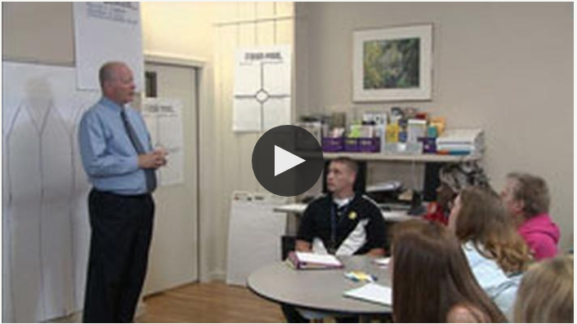
- Keep Connected utilizes graphic organizers on flip charts to help structure discussion for participants.
- Create an environment for participants to share their thoughts completely and without interruption.
- Write main ideas on the graphic organizer to refer to at a later time.
- Repeat the main ideas out loud to make sure you’re accurately capturing the person’s thoughts.
- Ask clarifying questions if something isn’t clear.
- Use ideas on the graphic organizer to spark new thinking and discussion for the topic.
Closure
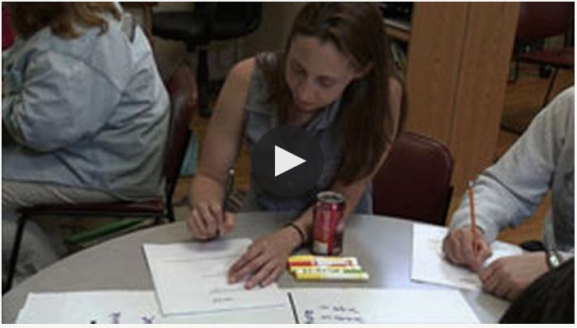
- Keep Connected provides opportunities at the end of each session for parents to reflect on what they’ve learned.
- Thank parents for their participation and sharing their thoughts.
- Highlight the purpose of the session’s discussion.
- If time allows, ask parents to share what they’ve learned, how what they learned connects to what they already know, and questions they have after the session. Use this feedback to structure future sessions.
Common Facilitation Challenges
If some participants talk over each other, try these strategies:
- Use a “talking piece” to help participants take turns talking. Often a talking piece is an object of significance for the group (or the facilitator). It’s placed in the center of a circle, then people hold it when they want to speak. Whoever is holding it is invited to speak while others listen (and cannot interrupt).
- Post a “parking lot” where you (or participants) can jot down issues that come up that are important but are not on topic for the evening. They are placed in the “parking lot” as a reminder to come back to them—either later in the session, after the session, in a future session, or in a different setting. Be clear when the topics will be addressed, otherwise participants may be reluctant to “let go” of an issue.
- Play quiet music during quiet times to reinforce the reflective goals of the time and to reduce the sense of awkwardness that some people feel during silence (which prompts them to talk).
If participants are slow to open up, try these strategies:
- Bring in everyone’s voice very early in each session. One reason to have introductions in every session (even if people know each other) is that speaking early on (even with just their name and a few words) makes them more likely to speak up later.
- Share first (briefly) as a facilitator. Opening up about your own challenges makes it safer for others to open up. Share your own experiences and stories that you believe participants will relate to. That said, avoid coming across as the expert or as having the final answer—which will only shut down other perspectives and voices.
- Push back on advice giving. If people share something in the group, there’s often a rush to give advice—when people just want a listening ear and to be validated in their experience. Cut off people giving advice and affirm the person’s experience. Thank them for sharing. Depending on the situation, you might ask them a follow-up question that will help them open up more. Or you might invite others to share their experiences that might be similar (without shifting to giving advice).
- Invite participants first to reflect (and even jot notes) before they share. Some people need time to collect their thoughts.
- Don’t rely on whole-group discussions. If you have more than four to six participants, breaking into pairs and small groups and structuring space for everyone to talk more privately can prepare them to share their perspective with the larger group.
- Thank participants for sharing. One facilitator said: “I always thanked them for sharing, ’cause it’s not easy to do. Some people don’t want to open up regardless of the high or the low or the discussion topic. I always said, ‘Thank you for sharing,’ something like that, so I think they felt valued, that they were able to open up and not be criticized on anything that they said or judged. It just allowed for sharing. It was great.”
If participants advocate for inaccurate information or harmful practices
Sometimes a parent may share inaccurate information or advocate for harmful approaches to parenting (such as harsh discipline). Here are some productive ways to respond:
- Avoid confronting or shaming. Rarely will these responses help change behaviors or attitudes, and it may erode trust or participation. Trying to convince them by quoting all the research rarely works either.
- Give the group time to “self-correct.” Often another participant will have a different perspective and will offer an alternative that will gain support.
- Affirm the motives, while offering alternative strategies. For example, you might say: “It sounds like you really want to ensure that your children follow the rules in your family. I wonder if you might try some other ways to get them to follow rules that might be even more effective. Do other people have some ideas they’ve used?” (You might also share your own experiences.)
- Guide the discussion to connect different elements of their relationships. For example, “It sounds like you really want to challenge your child to grow, so you have high demands. I wonder how you might do that in ways that also express care.”
- Suggest a separate session to focus on the topic, if it’s clear that interest is high. For example, they may be debating whether social media is good or bad. Set up a session focused on that topic. Bring in information or someone with expertise in the topic to guide the discussion productively.
- Be knowledgeable about resources and responsibilities for responding to harmful practices. Keep Connected is a general family strengthening resource, and is not designed as an intervention for harmful family practices. If you hear things in sessions that could suggest that abuse or neglect may be occuring, follow up in ways that are appropriate to your level of training or expertise. Privately discuss the issue with someone who is qualified to respond appropriately. If families need extra support, privately encourage them to connect with appropriate services. Ideally, personally introduce them to someone you trust who can offer additional services.

The Keep Connected program is brought to you by Search Institute
What is Keep Connected?
Healthy, strong family relationships are foundational to young people’s growth, learning, and well-being. These relationships build strong social and emotional strengths that kids use throughout their lives.
But great family relationships don’t just happen.
Keep Connected offers all kinds of families—and organizations that support them—ideas, activities, and experiences to help build strong family relationships. Our goal is to strengthen family relationships to help kids be and become their best selves.
Strengthen Your Family
Growing Up Responsibly
Understand Ages & Stages